
The 2020 General Binding Rules give you several options to remain compliant while owning a septic tank. Septic tanks cannot discharge to surface water. To sell your property legally, the system must either discharge to a drainage field, be redirected to the main sewer, upgrade to our Uni:Gem septic conversion unit, or be replaced with a sewage treatment plant. To read more about the General Binding Rules, click here
Enquiries
Enquiries
We would be delighted to hear from you and will respond to your enquiry within 24 hours. Thank you for your interest in Marsh Industries.

Frequently asked questions
This section has been created to provide clear and helpful information about Marsh Industries’ sewage treatment plants, addressing common questions relating to system operation, installation, maintenance, compliance and ongoing care.

What is the difference between a Septic Tank and a Treatment Plant?
A septic tank only separates solids from liquids and discharges partially treated effluent. A sewage treatment plant uses aeration and biological processes to produce cleaner effluent that meets environmental standards and can be discharged to a watercourse.
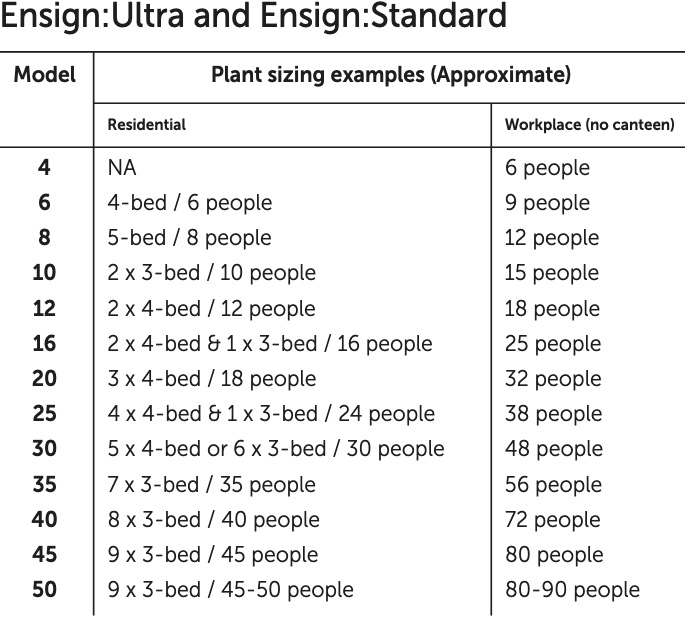
What size treatment plant do I need?
For domestic applications, the size is based on the number of bedrooms in the property. British Water Flows and Loads guidelines are used for accurate sizing.
What happens to my treatment plant in the event of a power cut?
Marsh Industries offer two distinct treatment technologies. SAF-MBBR and SBR. Our full Ensign range, Ultra:Polylok, Marsh Standard and UPL models all use SAF-MBBR Technology.
For these units during a power cut, the aeration and mechanical components stop. Short outages won’t cause issues, as the bacteria can survive for a while without airflow. Longer outages may reduce treatment efficiency and cause temporary odours. Once power returns, the plant will recover, but if the outage was prolonged and you notice any ongoing smells or performance issues, a service check is recommended.
Our Natural Solutions range uses SBR technology in the Nutra-Lite model. In the event of a short lived power cut the processes will resume as normal. For a longer duration the control panel will reset to the appropriate stage.
Will my treatment plant smell?
A well-maintained treatment plant should not smell. Odours usually indicate overloading, poor maintenance, or the use of strong chemicals that harm the bacteria within the system.
Why are some tanks the same physical size but designed for different population loads?
Although external dimensions may be similar, internal components differ. Tanks for higher population loads use larger compressors/blowers and increased volumes of Bio-media. This allows greater oxygen transfer and surface area, enabling higher treatment capacity while meeting design standards.
Do I need to involve Building Control and comply with Building Regulations?
Yes. All sewage treatment system installations must be notified to Building Control and comply with Building Regulations Part H. Failure to notify may lead to enforcement action, refusal of completion certificates or legal liability. Always consult your local authority.
I require a 2m invert depth – can this be achieved by stacking risers?
No. Marsh treatment plants (up to 50PE) are designed for a maximum invert depth of 1.55m. Stacking risers beyond this compromises structural integrity and voids certification. For deeper installations, engineered alternatives or site consultations can be arranged.
Do I need to run my compressor 24 hours a day?
Yes. Continuous operation is essential to maintain the media live and keep the biological process functioning in our SAF-MBBR models. Whilst our SBR units also require ready air supply from the compressor to complete processes.
How often do I need to service my unit?
For domestic units, we recommend an annual service.
How often do I need to empty the tank?
Ideally once a year for domestic systems. Guidance is given for larger units.
My tank is smelling, what do I do?
Check whether the system has been serviced and whether ventilation is functioning correctly. Odours usually indicate an issue that needs investigation.
Does my sewage treatment plant require desludging?
Yes. Domestic treatment plants must be desludged at least once every 12 months (or more frequently depending on usage). Regular desludging ensures effective settlement, prevents solids carry-over, and maintains compliance with discharge permits.
Does my treatment plant require servicing?
Yes — annually. A full Marsh service includes:
- Inspection and maintenance of the compressor/blower
- Testing ammonia and dissolved oxygen levels
- Examination of media and internal components for wear
- Verification of electrical connections and alarms
- Confirmation that the plant is operating efficiently and to design standards
Do I need to add chemicals to assist the treatment process?
No. Chemicals disrupt the biological processes. Treatment plants operate using natural aerobic digestion and require no chemical enhancement.
Can surface water or rainwater enter the treatment plant?
No. Surface and rainwater must be directed to a separate stormwater system. Allowing it into the plant can flush out biomass, reduce efficiency, and lead to system failure. Browse our Stormdammer here.
Can I install an air admittance valve (AAV) on the vent pipe to prevent odours?
No. AAVs restrict airflow and impair treatment performance. For odour control, a PolyAir vent with activated carbon should be installed to allow unrestricted airflow while neutralising discharge gases.
Does the treatment plant require a dedicated vent, even if the property already has an SVP?
Yes. A dedicated vent is essential to provide sufficient airflow for biological processes, prevent gas build-up, assist compressor cooling, and maintain stable aerobic conditions.
I am getting complaints that the pump is too loud, what can I do?
Noise is usually caused by vibration or the natural hum of the compressor. Installing the Whisspurr acoustic housing is the quickest way to reduce this, as it’s designed to significantly dampen sound and minimise vibration. If noise continues, a service check may be needed to rule out mechanical issues. Check out the Marsh Whisspurr here.
Still have questions? Give our team a call and we will be happy to assist!